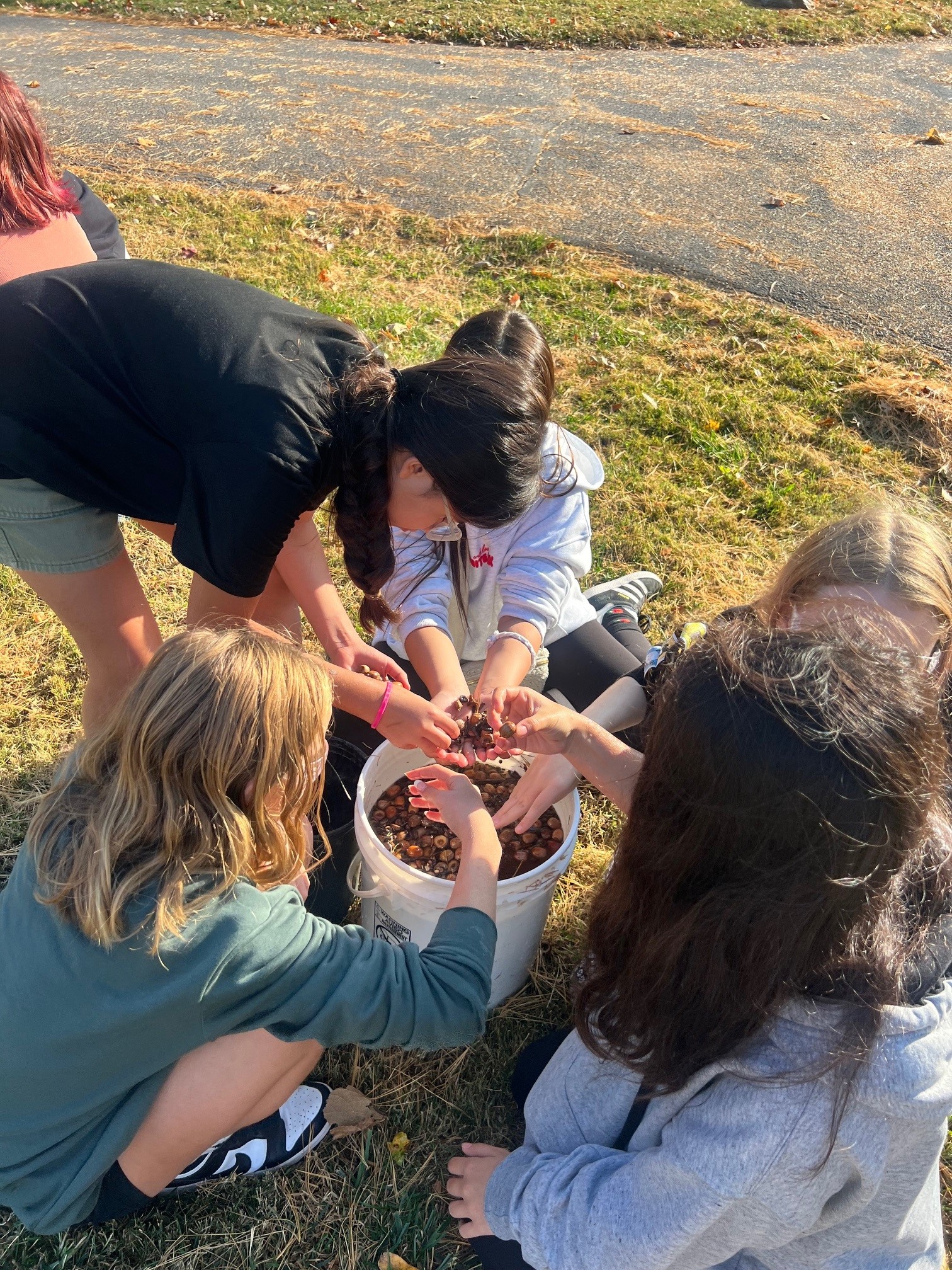
Learning about Acorn Seed Viability with Students

Visiting school groups explore a wide range of subjects during field trips to Crown Hill Cemetery and Arboretum. Using Indiana Science Academic Standards, sessions focus on natural resources, local habitats, host plants, and acorn seed viability, using examples from the many tree species within our arboretum. If you are interested in using Crown Hill Cemetery and Arboretum as an educational resource, you can schedule a tour. Or, if you and your family want to explore, here is a little about acorn seed viability.
Acorn seed viability refers to how long acorns remain alive and capable of germinating. It varies a lot by oak species and by how the acorns are handled. Most acorns are recalcitrant seeds, meaning they cannot dry out and don’t store well. White oak group acorns have a very short viability, lasting only from a few weeks to a few months. Red oak group acorns can last several months, and sometimes up to spring if kept cool and moist. In this educational session, visiting students checked the acorns viability through a “float test,” placing acorns in water. Sinkers are more likely viable, floaters often aren’t.
A viable acorn is firm, moist, and creamy-white inside, not brown or hollow. Acorns are meant to be planted soon after collection. If you want the highest germination success, plant them in fall or keep them cool and moist only until early spring.