Marcellis (Marcellus) B. Aldridge (1835-1882) was born in Shelby County, IN, where he farmed. By 1861, he moved his family to Indianapolis and worked as a teamster (a driver of draft animals and wagons); he worked in this profession until his death in 1882.
As the city of Indianapolis developed, many ethnic and religious groups settled in neighborhoods creating a sense of community, which included stores, organizations, and places of worship; some of these communities stayed connected even in death. Religious cemeteries were established around the city. Even within larger cemeteries like Crown Hill Cemetery, lots were bought for these communities. Usually, a church would purchase the lots and sell them back to members. At Crown Hill, several of these lots are scattered throughout the cemetery, including Plymouth Church, Catholics, Greek Orthodox, Muslim, Latino, and Light of the World Christian — just to name a few.
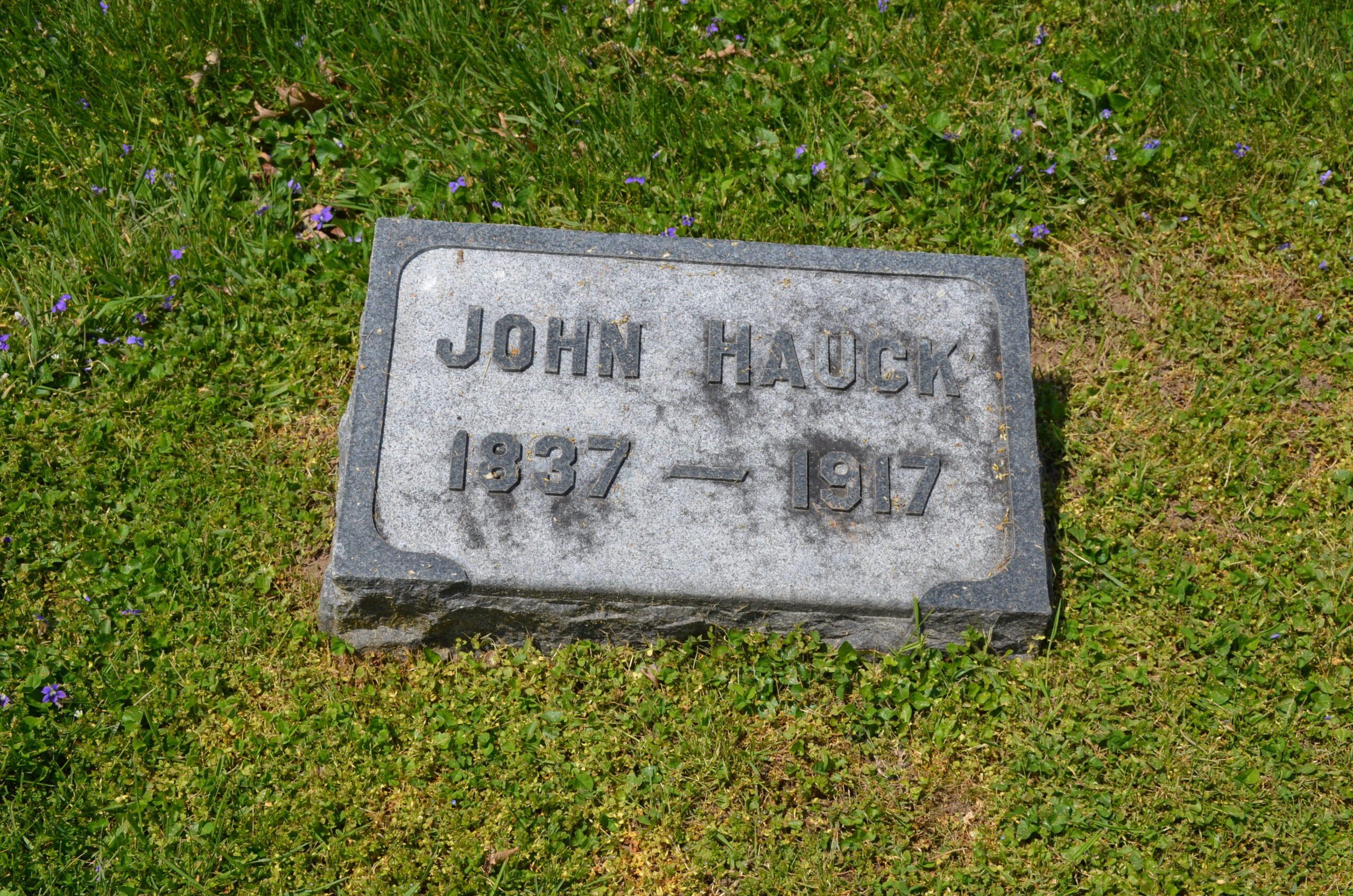
John Hauck (1837-1917) was born in Lawrenceburg, IN. By 1870, he was living in Indianapolis, working as a retail grocer and confectioner. He did well enough for himself that he was able to retire and live off his own income (as noted in the 1910 census record).
*Plymouth Church (Section 3, Lot 2)
The first portion of the lot was purchased by trustees of Plymouth Church in 1870, with four additions all by 1881; the lot holds 34 individuals. Plymouth Congregational Church was first organized in 1857 on what is now known as Monument Circle; they would sell their property to William English (also buried in Crown Hill Cemetery) for the English Opera House. The site would later become JCPenney and today, Anthem.
*Greek Orthodox (Sections 224 and 236) By the beginning of the 20th century, a small community of Greeks had settled in Indianapolis. By 1905, the community was large enough to request a priest from Greece. Their request was granted and they dedicated their parish, Holy Trinity Greek Orthodox Church. Many members of the congregation are buried in and around Sections 224 and 236.
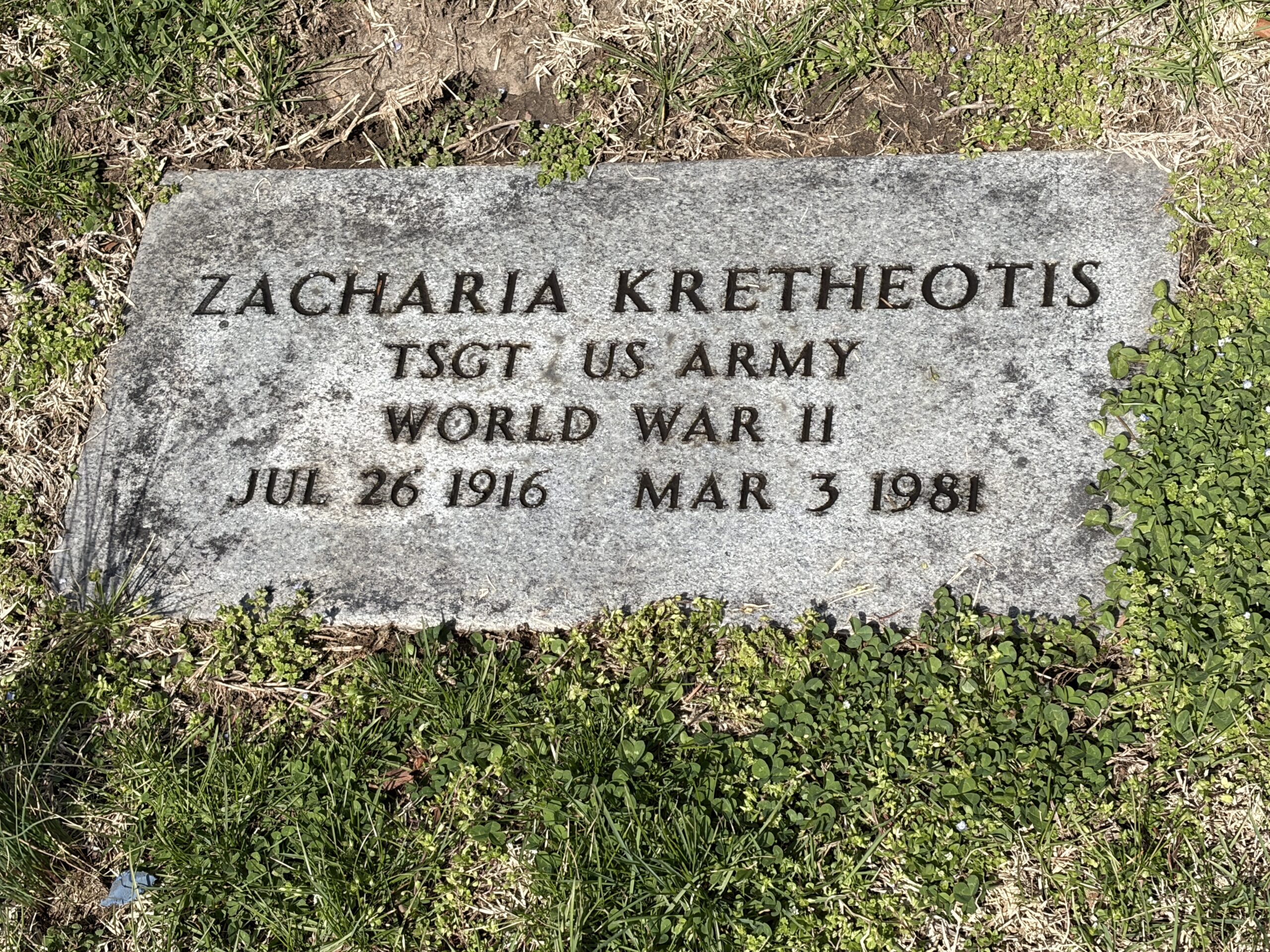
Harry J. Apostolakis (1898-2000) was ordained as a priest in the Greek Orthodox religion in 1927 in Crete, before coming to the United States in 1940. In 1940, he was elevated to protopresbyter, the highest rank a married clergyman in the church can obtain. He served several churches in Indiana, including the Holy Trinity Greek Orthodox Church. Every year, members of his church and family have a volunteer workday and clean the stones, pick up sticks, and assure the tidiness of the stones while leaving fresh flowers on many graves at the end of the day.Zacharia Kretheotis (1916-1981) was first generation born from Greek and Turkish immigrants (Nick and Angeline, also buried in Crown Hill Cemetery). Zacharia (also known as Jack or Zack) served in WWII before moving to Gary, IN, where he worked as a steel welder in the mills. During the anti-communist campaign of the 1940s and 1950s (McCarthyism era), Kretheotis was brought in front of the House Committee on Un-American Activities for being a higher-up in the “Communist apparatus.” He attended his hearing but refused to testify.
*Cross Columbarium
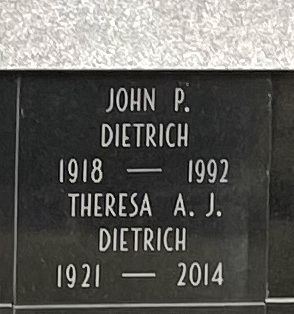
Clarence Anderson (1914-2007) was born in Illinois and went to the University of Illinois, majoring in chemical engineering. This would lead to work in the petroleum refinery industry, with him serving as superintendent at the Rock Island Refinery in Indianapolis by 1949. He later served on the Mayor’s Commission on Air Pollution and the Ohio River Sanitation Commission on Water Pollution.John P. Dietrich (1918-1992) was born in Ohio. He worked as a professor at several universities including Ohio State University and East Michigan State University, teaching human anatomy and physiology. A WWII veteran, he was active in Boy Scouts and the youth camps. After retiring as a professor, he worked as a job counselor.The Cross Columbarium, near the Subway interns the cremains of over a hundred individuals.