
Daffodils and Crown Hill Cemetery and Arboretum
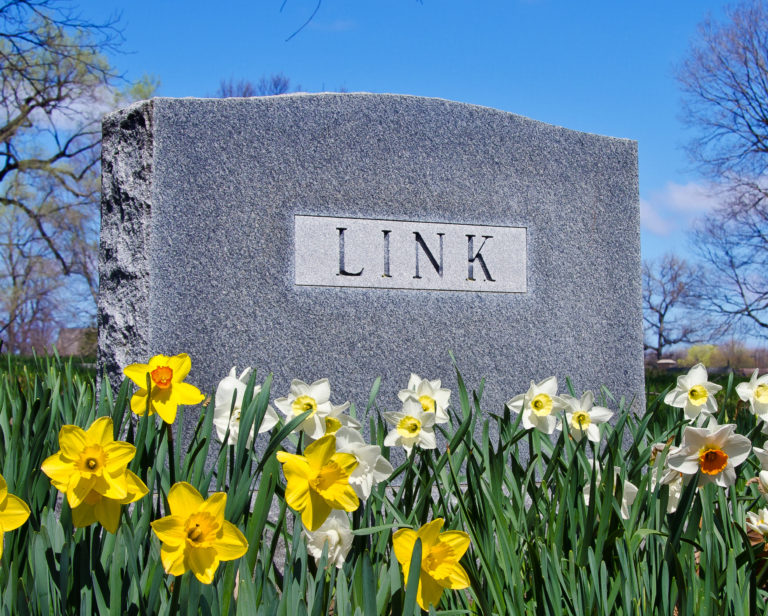
While daffodils are not native plants, they are commonly used by multiple fields of study to help document where humans have impacted nature. They are not preferred food by wildlife, and they do not readily seed in a way that allows the plant to spread quickly. Finding daffodils on a site is a direct indicator of intentional planting by humans. When found in a woodlot with no other visible human impact, archaeologists use daffodils as a sign that an early structure(s) may have been in that location and lost to nature over time.
At Crown Hill Cemetery and Arboretum, one of our most historically significant connections to daffodils is Helen Link, a gardener and daffodil breeder, who is buried in the cemetery.
Born in northern Indiana near Elkhart, Helen Kegerreis graduated from Indiana University and the Methodist School of Nursing, then worked as a surgical nurse from 1932 to 1937. She married Goethe Link, M.D. (buried in Crown Hill Cemetery), one of the founders of the IU School of Medicine and himself a practicing surgeon. Dr. Link bought his wife a bushel of daffodil bulbs one day in the 1940s, thinking they would be a welcome addition to their 50-acre home high on a hill south of Mooresville. The property was also the home to a full-size observatory Dr. Link built himself in the 1930s and shared with the Indiana University Astronomy Department.
Helen, whose fondness for daffodils went back to childhood and memories of her mother, planted about a thousand bulbs over the next several years, the beginning of an incredible passion that lasted the rest of her life. Link has 56 registered cultivars of narcissus to her name, and one named after her by another breeder.
