Birds and Bugs – Students Learn How Camouflage Helps Insects Survive
Camouflage is an essential survival strategy in the natural world. Students discover the value of protective coloration as they pretend to be birds in search of colored bugs. Utilizing our South Woods Nature Trail and meadow, students visiting us on site can participate in a modeling activity to explore how an animal’s coloration (camouflage) affects its ability to survive.
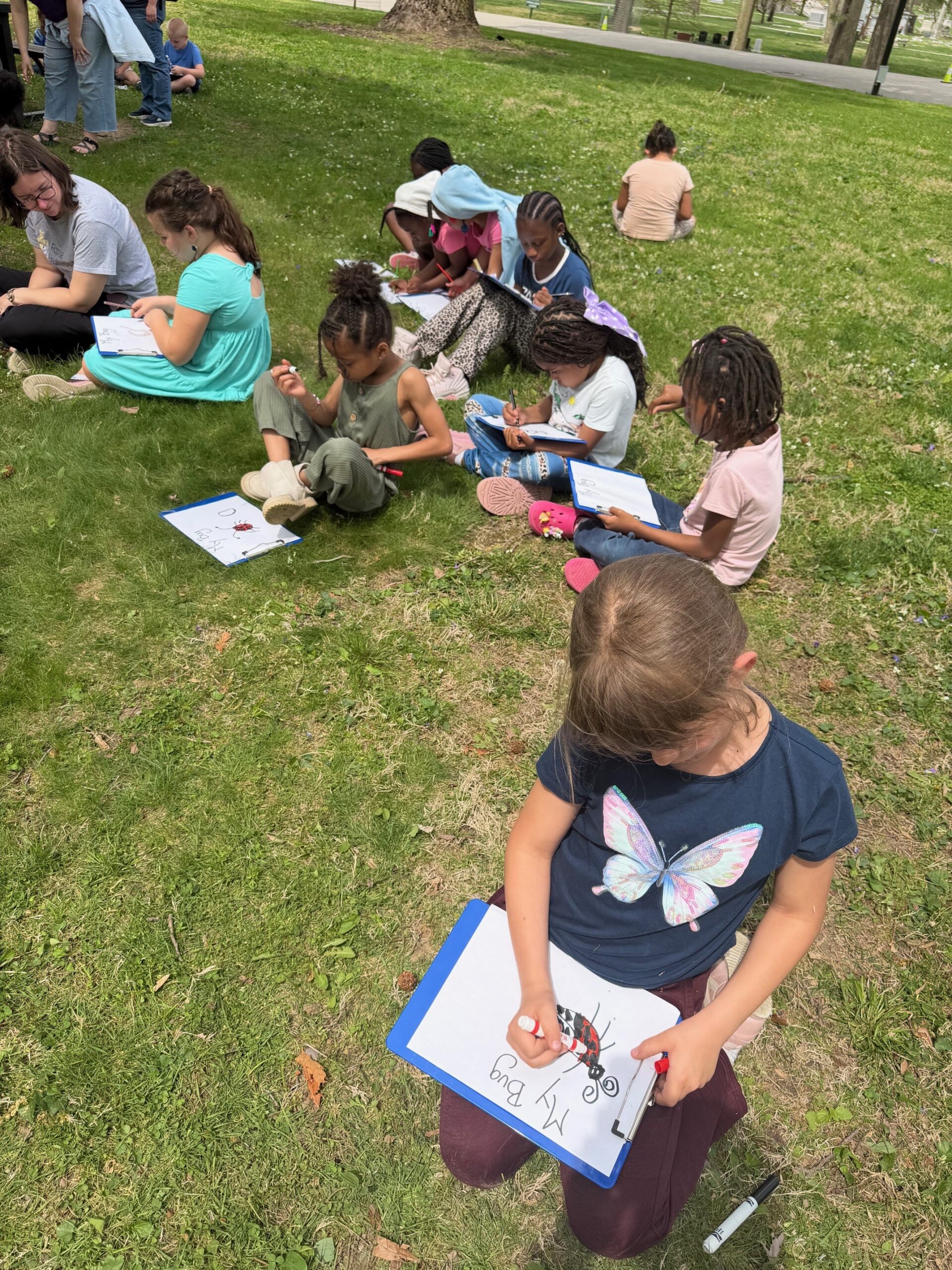
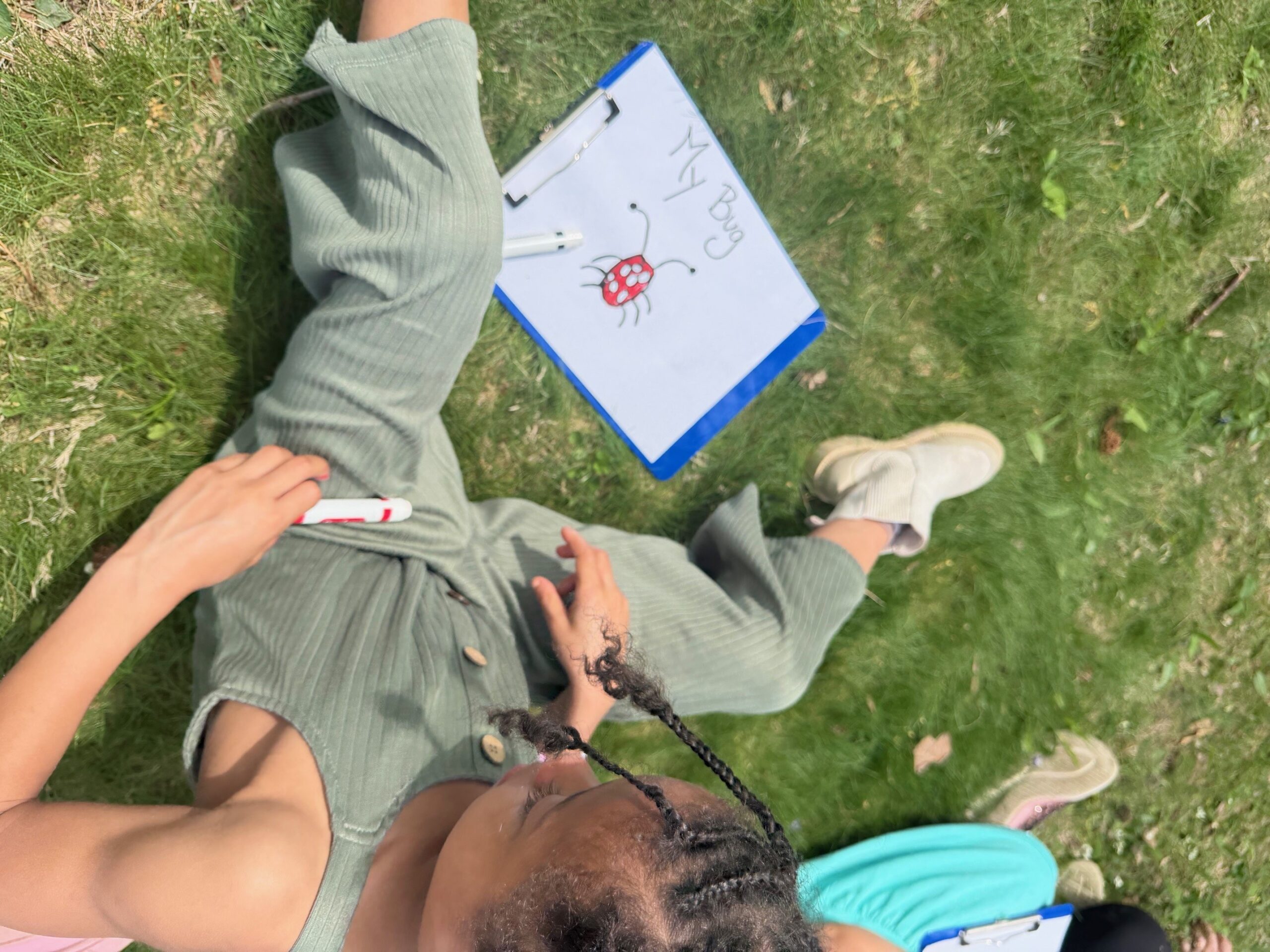
This activity addresses various science, math, and physical academic standards. Using various colored pipe cleaners as “bugs,” and clothes pins as “bird beaks,” students participate in a team simulation in which they hunt for bugs to bring back to their team’s bird nest. Students then count and record the number of bugs of each color. What color was easiest to find? How does this help the bugs survive? What color bug has the best camouflage for the environment of our South Woods and why? Students also create pictographs or bar graphs to represent the data they collected. As an extension activity, students then create their very own bug, using what they learned from the activity to draw what traits their ideal bug would have to hide from predators.